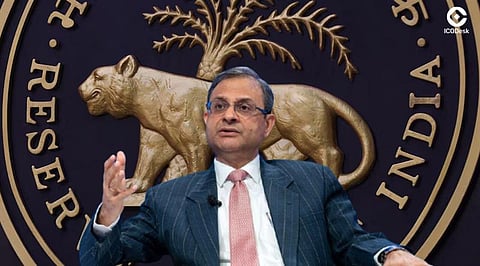


India will likely continue to draw foreign investment as strong domestic growth supports demand across sectors, Reserve Bank of India (RBI) governor Sanjay Malhotra said in an interview with NDTV Profit on Tuesday. He said overseas investment inflows may vary from year to year, yet India should keep attracting “quality investments” in banking, technology, and the wider economy.
Malhotra linked the outlook to India’s growth trajectory, recent trade agreements, and large multi-year commitments by global companies such as Google, Microsoft, and Amazon. He also said recent capital inflows reflect years of work that strengthened banks and non-bank financial companies (NBFCs), rather than a single year of policy actions.
Malhotra said India’s growth remains intact and continues to support foreign capital interest. He pointed to recent growth performance and official projections that keep India among the faster-growing major economies.
He said capital demand should remain firm as businesses expand capacity and households sustain consumption. He also cited data published on 7 January that projected 7.4% growth for the current financial year, supported by manufacturing and services activity, steady consumer spending, and fixed-asset investment.
India’s financial sector has seen several large transactions that brought overseas capital into private entities. Malhotra referenced recent deal activity as evidence that investors continue to back the banking and NBFC ecosystem.
He cited Emirates NBD’s agreement to acquire a majority stake in RBL Bank for about $3 billion, Blackstone’s purchase of a 9.9% stake in Federal Bank for about $705 million, and Abu Dhabi-based IHC’s acquisition of a 43.46% stake in Samman Capital for about $1 billion. He said these moves support the view that investors target India’s financial resilience and long-term growth prospects.
Malhotra described the inflows as patient capital rather than short-term “hot money.” He also said the RBI has not adjusted eligibility rules to attract these investments and has kept regulatory norms unchanged. He added that 2025 saw roughly $15 billion in committed or actual investments into private financial entities, which he said underscored confidence in the system.
On inflation, Malhotra said recent softness reflected food price base effects and lower global commodity prices. He said those factors represent supply-side drivers and may fade over time, which could lift inflation readings.
He said RBI projections place inflation in a 3%–4% range, which he described as comfortable, while core inflation remains steady. Government data showed CPI inflation rose to 1.3% in December from 0.7% in November, marking a three-month high after a long decline that created a low base.
Malhotra also addressed the rupee’s exchange rate and said observers should not judge economic strength only through the currency level. He said the rupee’s movement has remained orderly and not excessively volatile, and he reiterated that markets should determine the exchange rate while the central bank maintains its consistent approach.