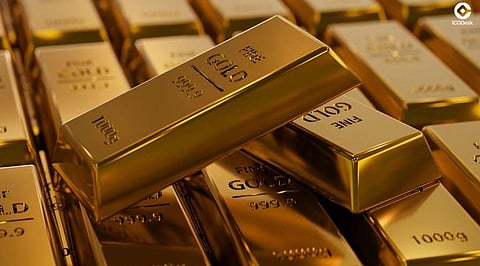

Gold has always been seen as a safe-haven asset, but 2026 is proving that even gold isn’t immune to volatility. After a strong rally in 2025 and early 2026, recent price movements have left investors asking a key question: will gold continue to rise, or is a correction underway?
Here’s a clear, expert-backed outlook on where gold prices are headed.
Prices in India have dropped to around ₹1.46 lakh per 10 grams after recent declines.
Globally, gold has fallen due to high interest rates and a strong US dollar
Surprisingly, even geopolitical conflicts haven’t consistently pushed prices up.
This signals that gold is currently being influenced by multiple competing forces.
Gold does not pay interest. So when central banks keep interest rates high, investors shift to bonds and fixed-income assets.
This is why recent US Federal Reserve decisions have put pressure on gold prices.
Gold traditionally rises during inflation or geopolitical instability.
Rising oil prices and global tensions still support gold demand
Long-term uncertainty keeps gold attractive as a hedge
Experts say these factors will continue to support prices in the long run.
Central banks across the world are increasing gold reserves.
Strong institutional demand creates a price floor
This is one of the biggest bullish signals for gold
Forecasts suggest demand will remain strong through 2026.
Gold and the US dollar typically move in opposite directions.
A stronger dollar makes gold expensive globally
This reduces demand and slows price growth
In India, gold prices are also influenced by:
Rupee vs dollar movement
Import duties and GST
Local demand (weddings, festivals)
Bullish Outlook (Long-Term)
Gold could reach $5,000+ per ounce by late 2026
In India, estimates suggest ₹1.7–1.9 lakh per 10 grams
Some projections even hint at ₹2 lakh if the rupee weakens further
Long-term trend: Upward, but not linear
Gold is expected to remain stable with gradual growth
Gains may be slower compared to the 2025 rally
Prices may move in a range rather than a straight rally
High interest rates
Strong dollar
Profit booking after record highs
These factors can cause temporary price drops and corrections.
Short Answer:
Short term: Volatile, with ups and downs
Long term: Likely to rise gradually
Avoid panic buying at peaks
Buy on dips (staggered investing)
Consider diversification (gold ETFs, digital gold, etc.)
Keep a 5–10% allocation to gold in a portfolio.
Gold in 2026 is no longer a one-way upward story—it’s a strategic asset driven by global economics.
While short-term fluctuations may continue, the bigger picture remains intact:
Gold is still a strong long-term hedge against uncertainty, inflation, and currency risks.