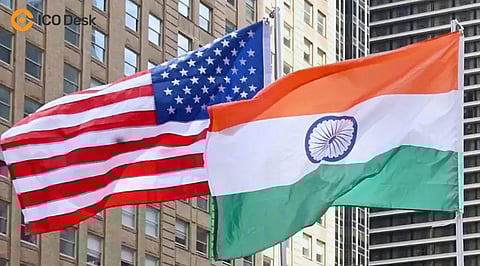


The United States has indicated that its trade discussions with India are progressing rapidly and could lead to a significant rollback of punitive tariffs. Still, only if New Delhi agrees to broader market-access commitments, a senior American trade official suggested on Wednesday.
In remarks before US lawmakers, US Trade Representative Jamieson Greer described the current negotiations with India as ‘fairly far advanced,’ and an opportunity for India to get the same ‘no-tariff treatment’ the United States extends to other major trade partners - provided India is willing to ‘play ball’ by opening its markets to US exporters.
“We don't have trade deals with India or Brazil yet, but with India, the talks are pretty well advanced,” Greer said, adding that the US is prepared to give preferential treatment to countries offering the access Washington is seeking.
The comments stand in sharp contrast to the sentiment at the beginning of this year. Trade tensions between the two democracies had risen after the Trump administration imposed punitive tariffs, some as high as 50 per cent, on Indian exports.
The move followed New Delhi's continued purchase of discounted Russian oil and perceived market barriers to US agricultural products.
Negotiators from the two sides have been holding intensive discussions in New Delhi this week, with a US delegation, led by Deputy US Trade Representative Rick Switzer, on a two-day visit to iron out longstanding tariff disputes and several other friction points.
India's Commerce and Industry Ministry told reporters that trade talks are moving forward on a parallel track, with officials describing the atmosphere as constructive. The US negotiators have reportedly described India's latest market-access offers as the ‘best received,’ signaling a potential breakthrough in bilateral negotiations.
Analysts caution that while progress is real, sticking points remain, most notably over agricultural market access and India’s protection of sensitive sectors such as dairy and rice. Trade bodies have urged New Delhi to balance concessions carefully to avoid undercutting domestic producers.
A successful deal could pave the way for a broader BTA aimed at a major expansion of commerce between the two economies, potentially doubling bilateral trade in ten years. Sources close to the negotiations, however, emphasize that what is required from both sides is political alignment and compromise on key economic interests before any tariff removal can be agreed upon.
Washington is holding out a possible tariff reprieve if India agrees to deeper trade concessions, but key issues, including agriculture and market access, remain under negotiation.